
What the Roofline Reveals About Style, Structure, and Period
Roofs are imposing. They hover over the structure, setting the stage before you ever register a window, a porch column, or a front door.
The roof tells you almost everything you need to know and I love a good roof design.
A steep, highly ornamented silhouette signals Victorian drama. Deep overhangs and visible structure suggest Craftsman restraint. Clay tile and low, grounded lines feel unmistakably Southern California. A flat or sculpted modern plane points you straight to the postwar era.
Long before you study the details, the roofline gives away the decade, the design philosophy, and the cultural moment that produced the house.
If you want to start understanding architecture, start at the top. The roof is the clearest, most immediate expression of style. Here is your guide to how roof lines indicate the style. It’s the first place my eye goes and it should for you as well.
Victorian
Gabled Victorian
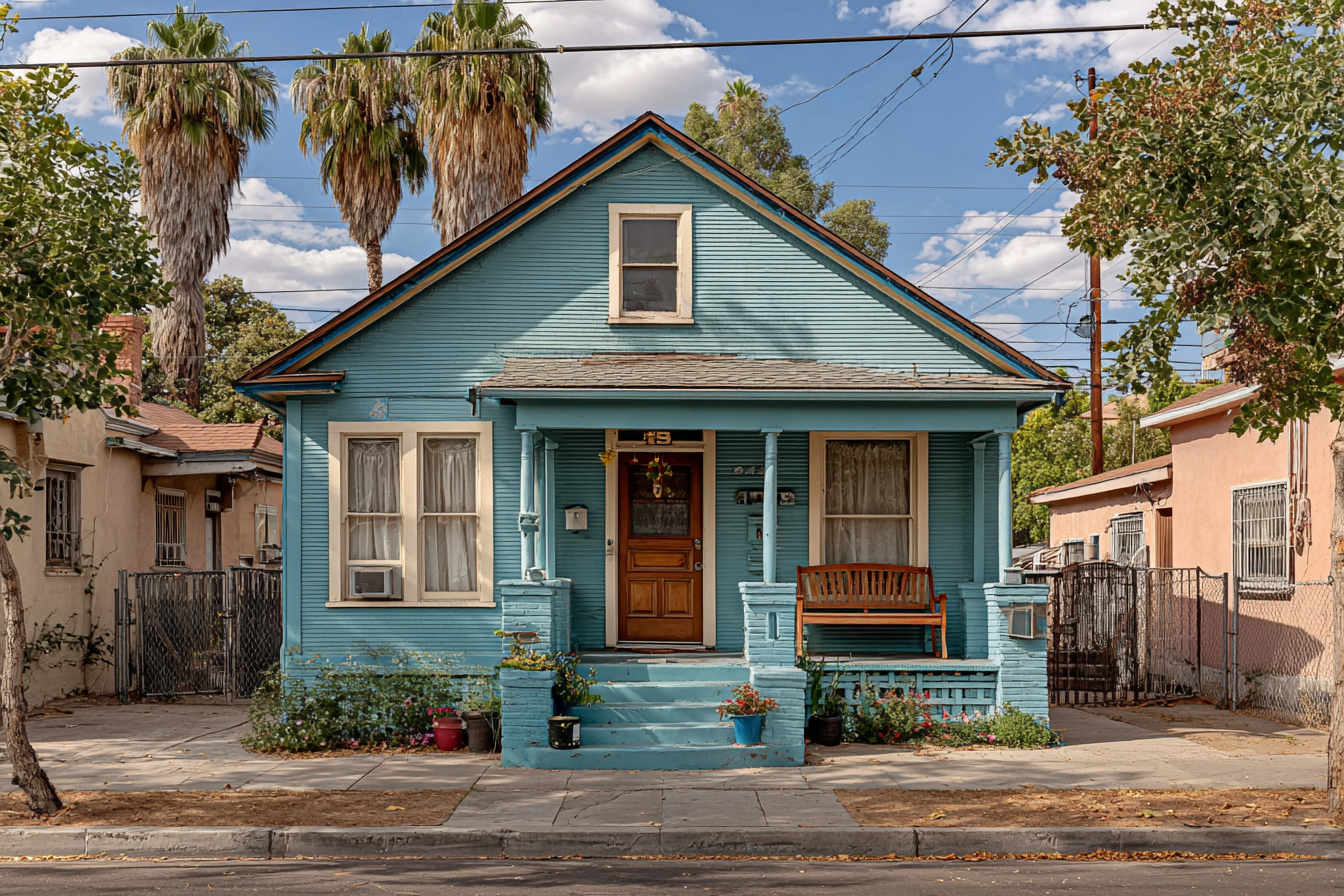
The gabled Victorian is defined by steep triangular peaks, often facing the street. Many Southern California examples feature cross-gables, where secondary rooflines intersect the primary ridge.
This is the classic Victorian silhouette most people recognize. The steep pitch emphasizes height and ornament. Decorative bargeboards, spindlework, and patterned shingles sometimes decorate the gable face itself.
Here, the roof becomes architecture’s billboard. It announces the style before the rest of the façade is even processed.
Complex Victorian / Queen Anne
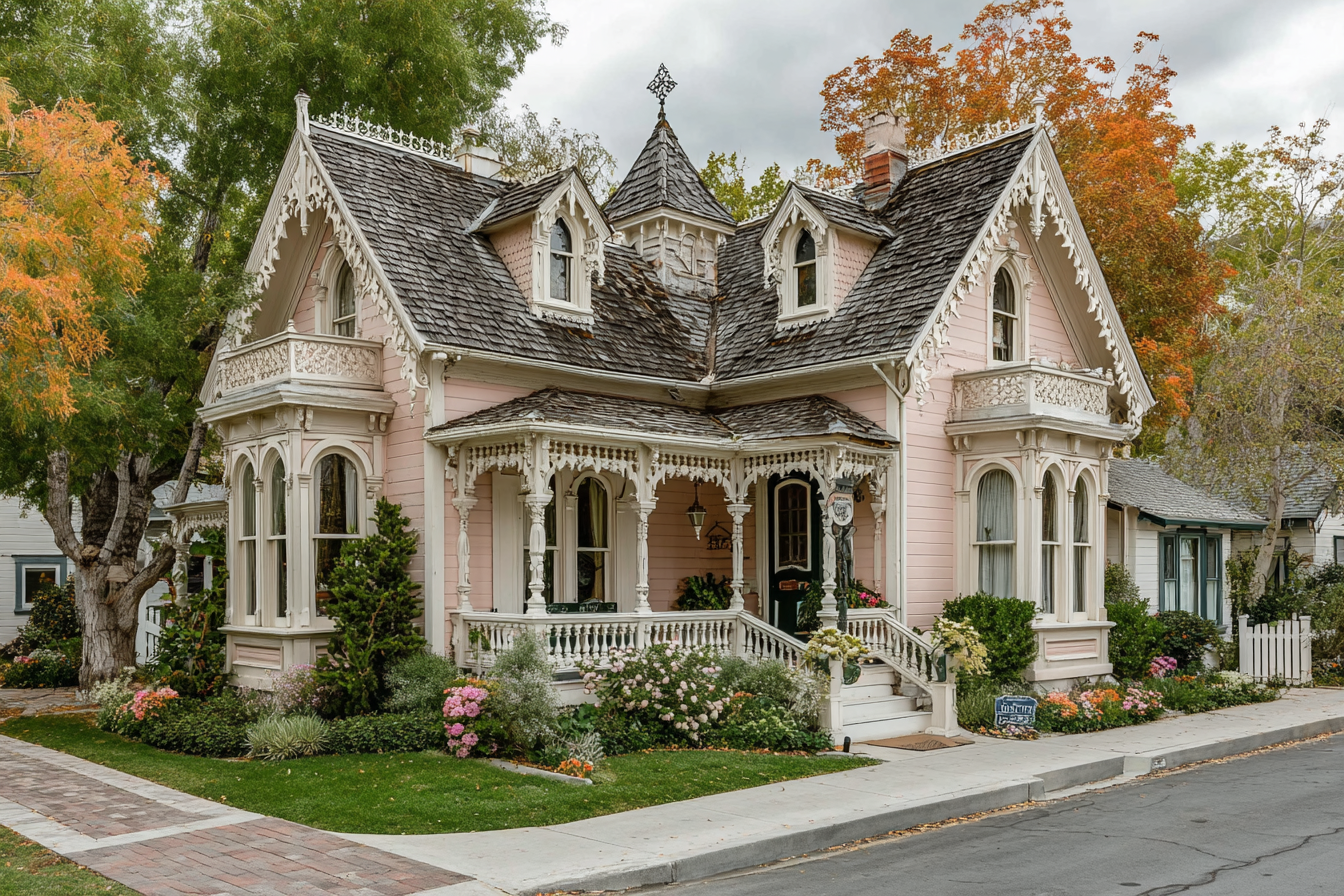
The most elaborate Victorian rooflines combine multiple intersecting gables with towers or turrets capped by conical or faceted roofs.
These compositions are intentionally asymmetrical. The roofline rises and falls, projecting movement and hierarchy. Decorative ridge cresting, finials, and layered textures amplify the vertical effect.
This is architecture as spectacle. The roof does not simply shelter the house. It defines its identity.
Hipped
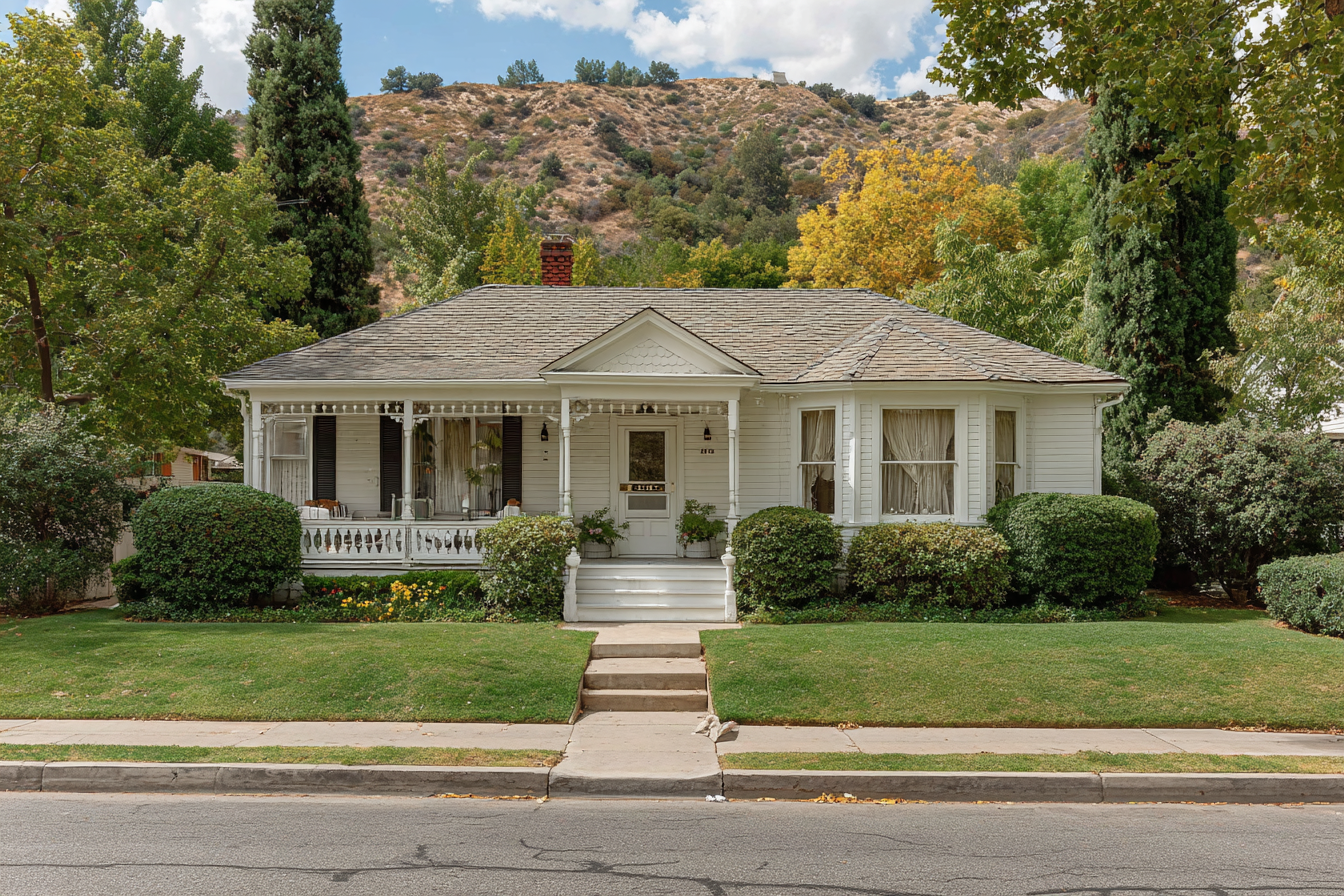
A hipped Victorian roof slopes downward on all four sides, typically at a steep pitch. In Southern California, these are common on more restrained or vernacular examples, especially Eastlake and simpler late 19th-century homes (often referred to as Unadorned).
The effect is formal and balanced. Unlike the theatrical cross-gable, the hipped form feels compact and unified. The verticality remains, but the silhouette is cleaner and less fragmented. On narrow urban lots, this created height without excessive ornament.
It is Victorian drama with discipline.
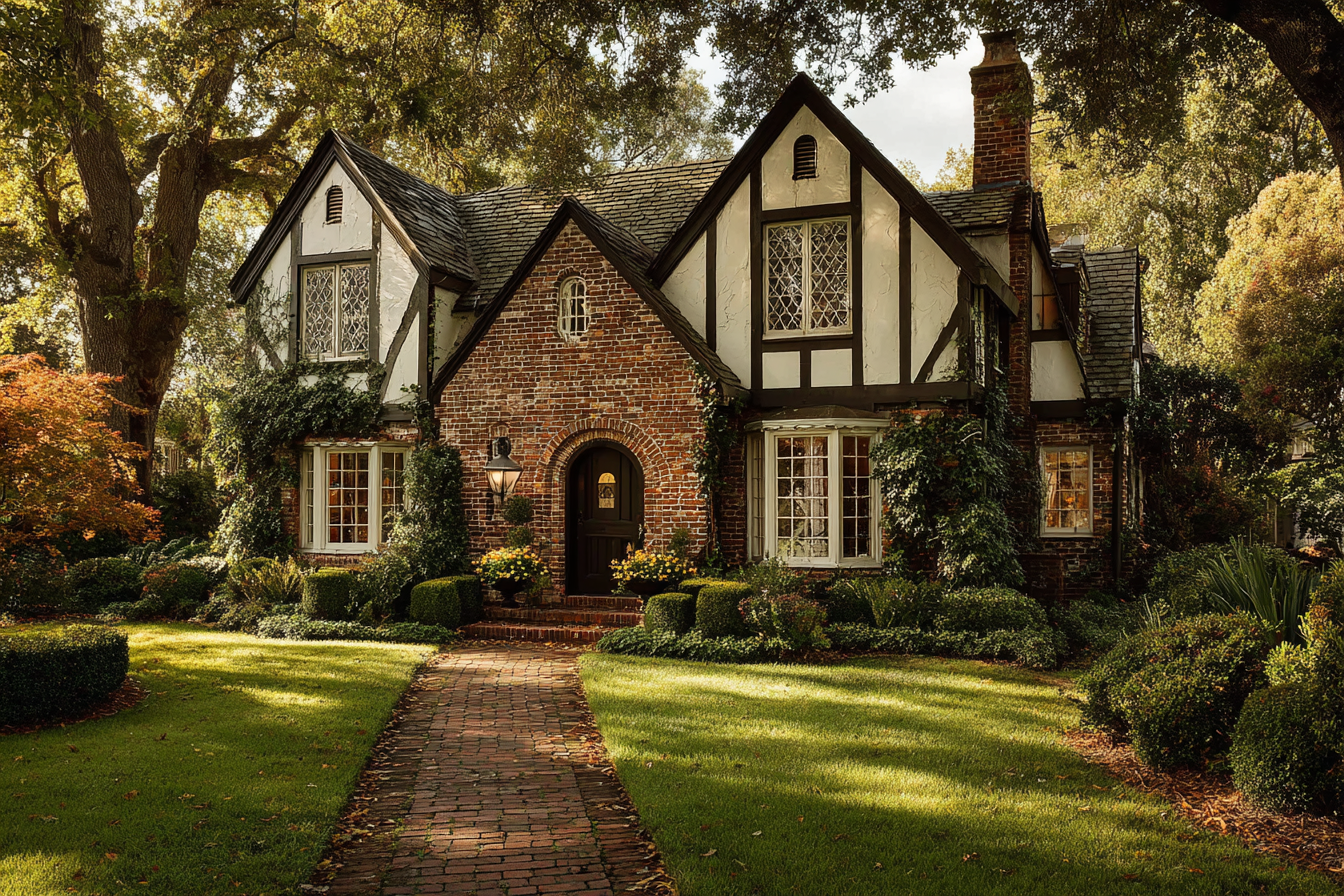
Tudor
Steep Cross Gable
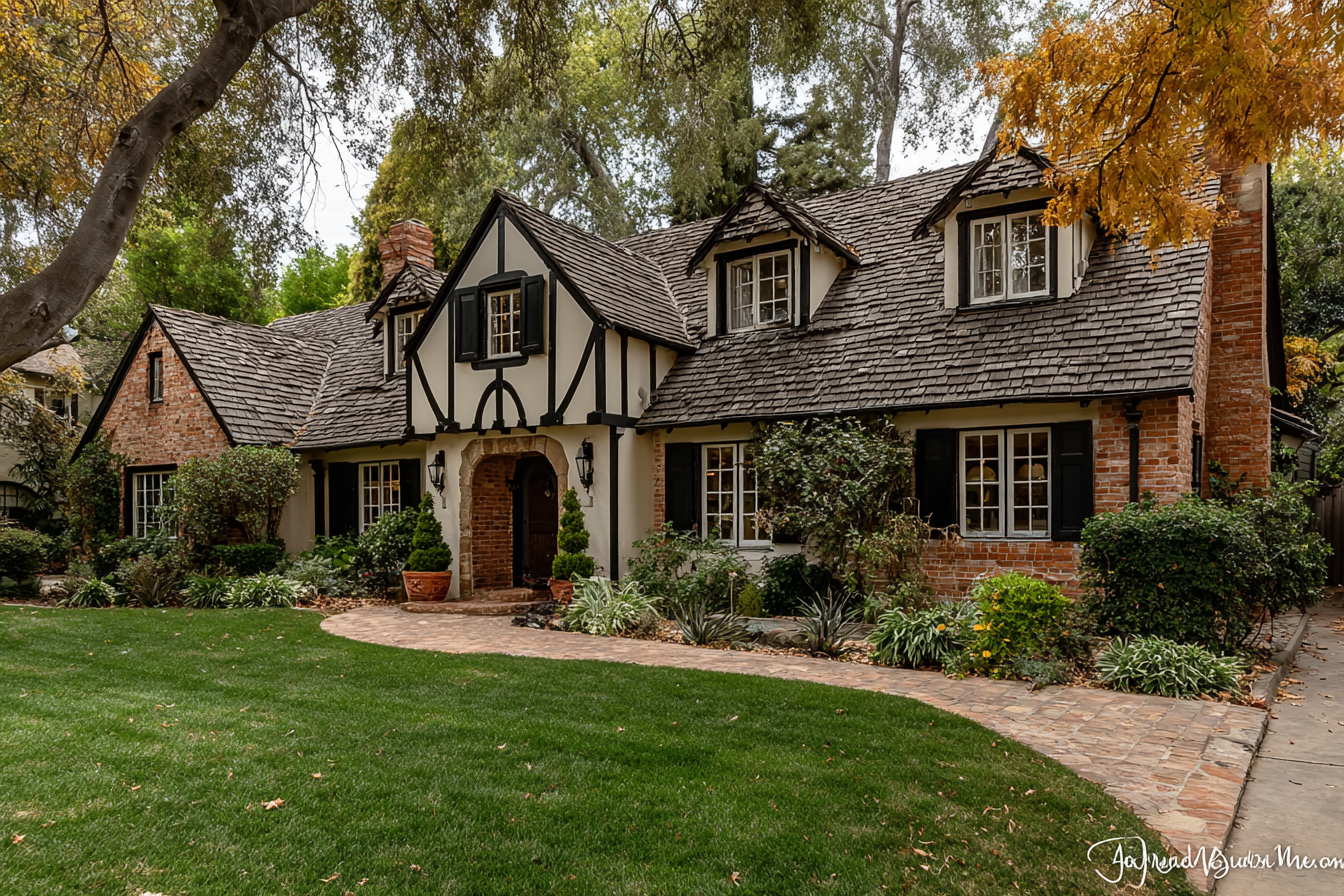
The defining Tudor silhouette is a steep cross-gable with minimal overhang. One dominant front-facing gable often anchors the front elevation, while secondary gables intersect behind it.
The pitch is intentionally dramatic. It creates vertical emphasis and a sense of weight. Unlike Victorian roofs, which rely on ornament and layering, Tudor roofs depend on angle and mass.
The façade supports the roof, not the other way around.
Catslide Roof
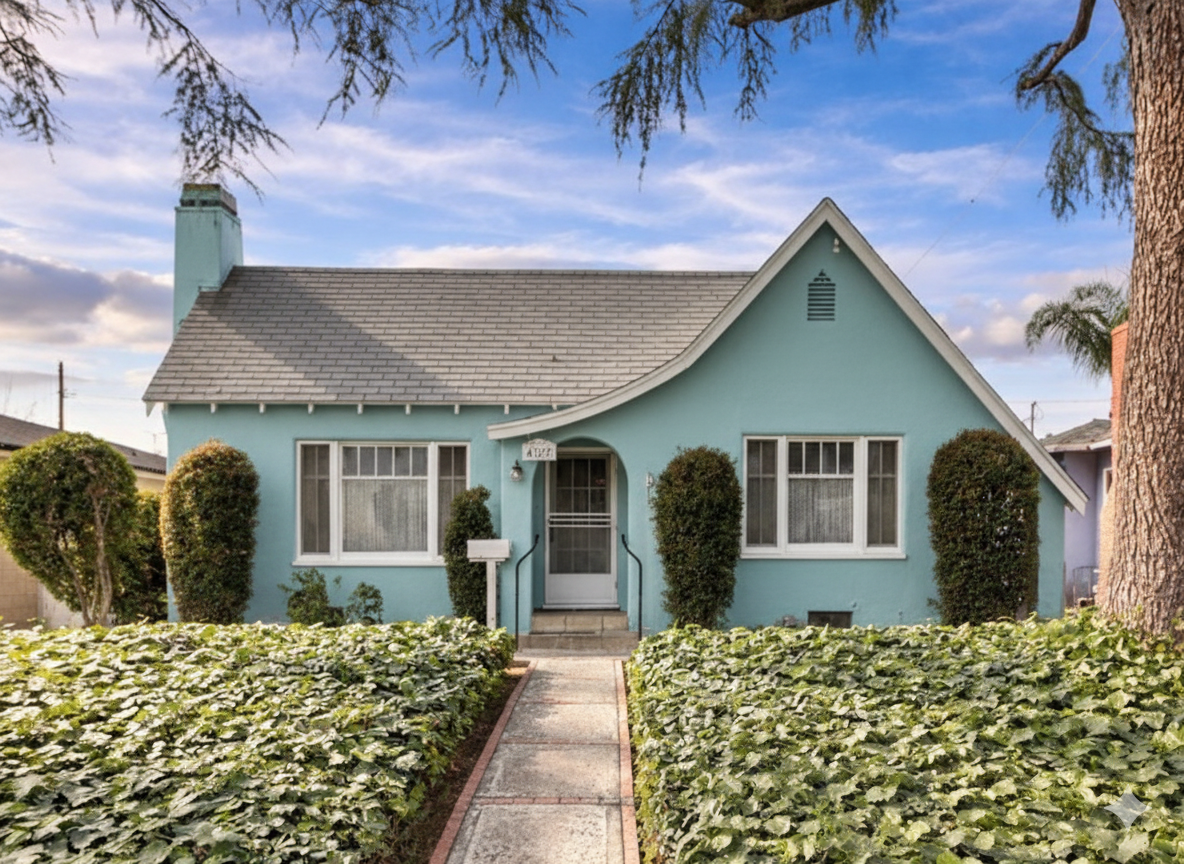
A catslide roof features a steep front-facing gable paired with a rear slope that extends much lower and longer than the front. The result is an asymmetrical profile that feels intentional rather than accidental.
In Southern California Tudor Revival homes, this form preserves the dramatic street presence while quietly expanding the structure behind it. From the sidewalk, you see height and pitch. From the side, you notice the roofline stretching downward in one continuous plane.
It is a practical solution, but it reads as romantic and storybook. The silhouette does the work and cats love them.
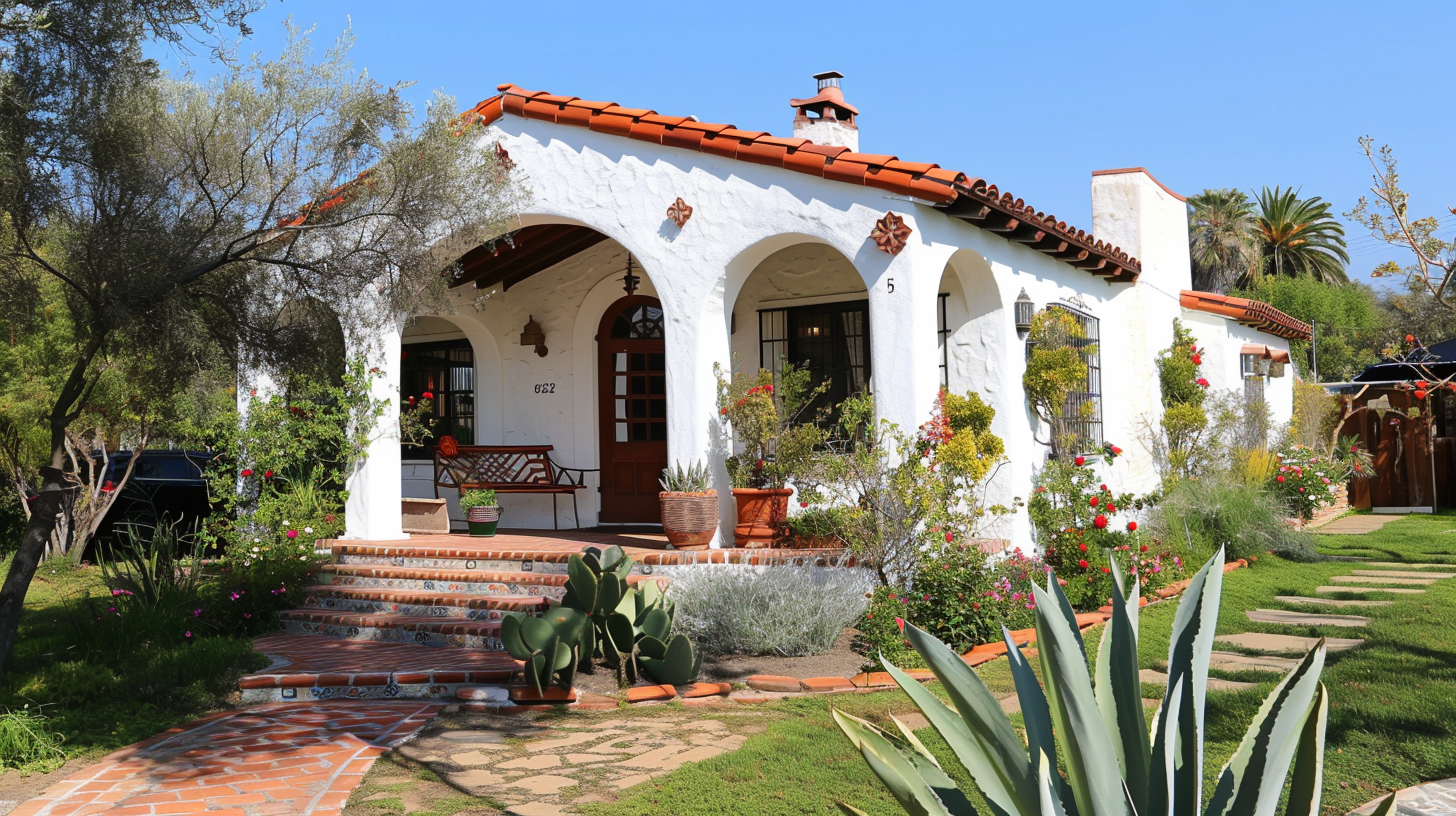
Spanish Revival
Low Pitched Clay Tile
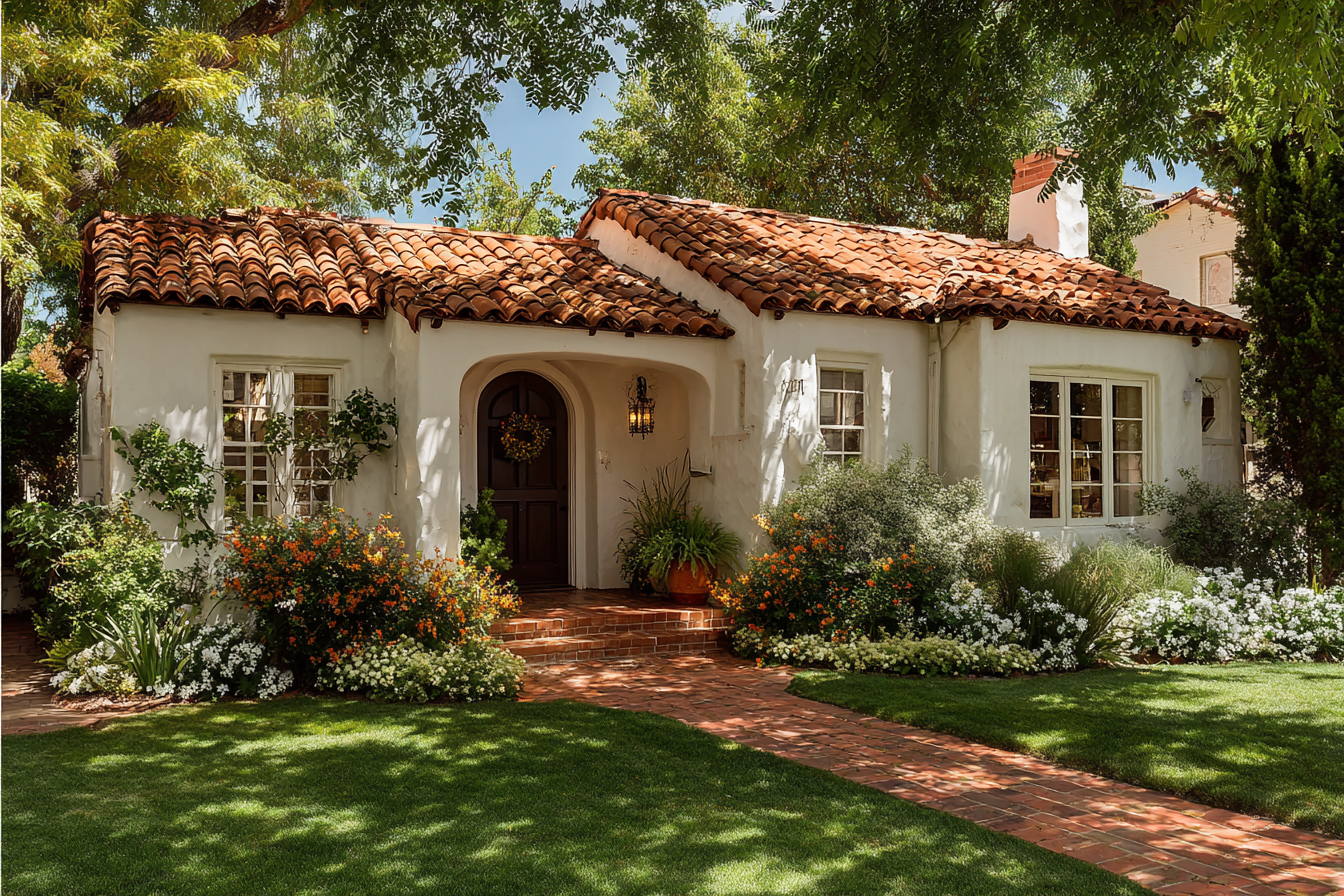
In Pasadena and across much of Northeast Los Angeles, the most common roof type on a Spanish Revival is this low-pitched gable roof clad in red clay barrel tile.
The pitch is modest. The overhangs are controlled. The emphasis is on material and shadow. Clay tile introduces rhythm and texture, catching light differently throughout the day.
Unlike Tudor or Victorian roofs, which announce themselves through steep angles, Spanish Revival roofs feel calm and deliberate. They anchor the home to the landscape and climate.
The roof does not reach upward. It settles in.
Parapet Roof
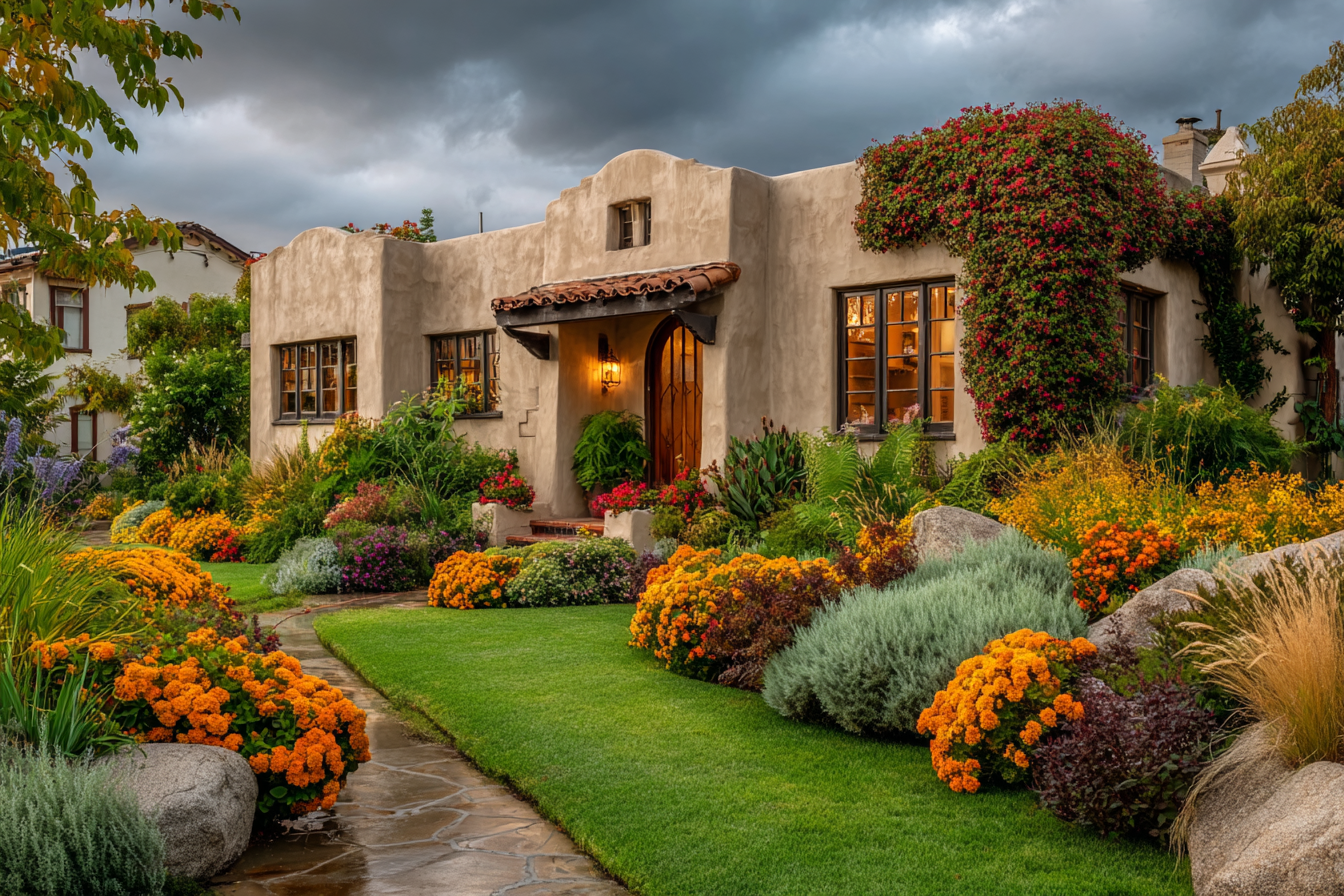
In a parapet configuration, the actual roof sits behind a raised stucco wall. From the street, you often cannot see the roof plane at all. What defines the silhouette is the parapet itself—sometimes straight, sometimes gently curved, occasionally stepped.
The effect is sculptural. The building reads as a solid form rather than a pitched structure. This approach draws from Mission and Mediterranean precedent, where thick masonry walls and shaped rooflines defined the architecture.
Here, the wall becomes the roofline.
Craftsman
Front Gabled
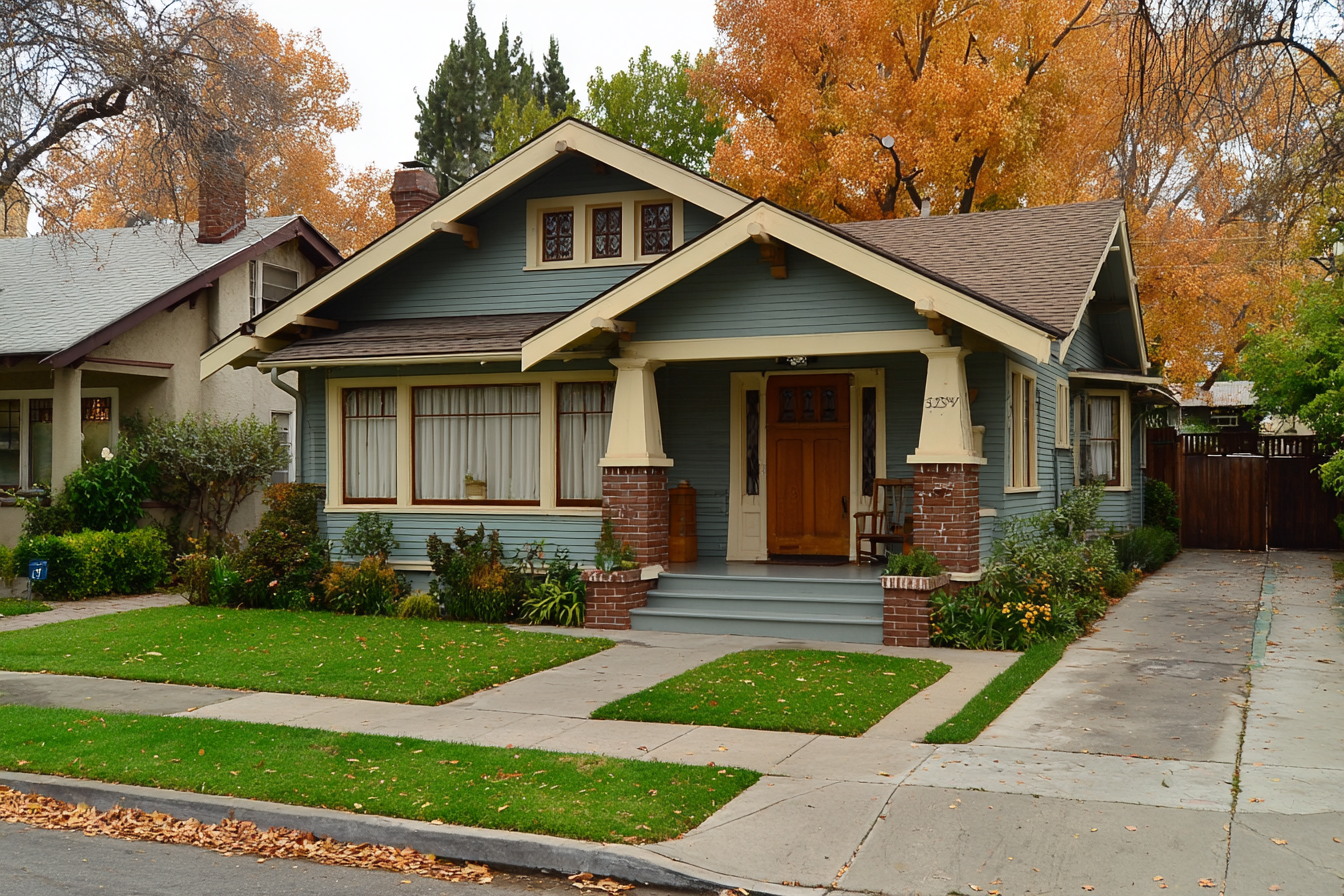
The classic Craftsman silhouette is a low-pitched front-facing gable with generous eaves and exposed rafter tails. Early high-style examples, particularly between 1904 and 1910, often featured slopes in the 3:12 to 5:12 range (three inches up for every twelve long). The effect is broad and horizontal. The roof reads as a protective plane hovering over the home.
This proportion reflects strong Japanese influence, especially in the work of Charles Sumner Greene and Henry Mather Greene. Traditional Japanese architecture emphasized extended eaves, visible joinery, and horizontality. That influence is evident in early Pasadena builds.
Later examples sometimes steepened, reaching 8:12 or more, but the emphasis on shelter and structural expression remained.
Cross-Gabled
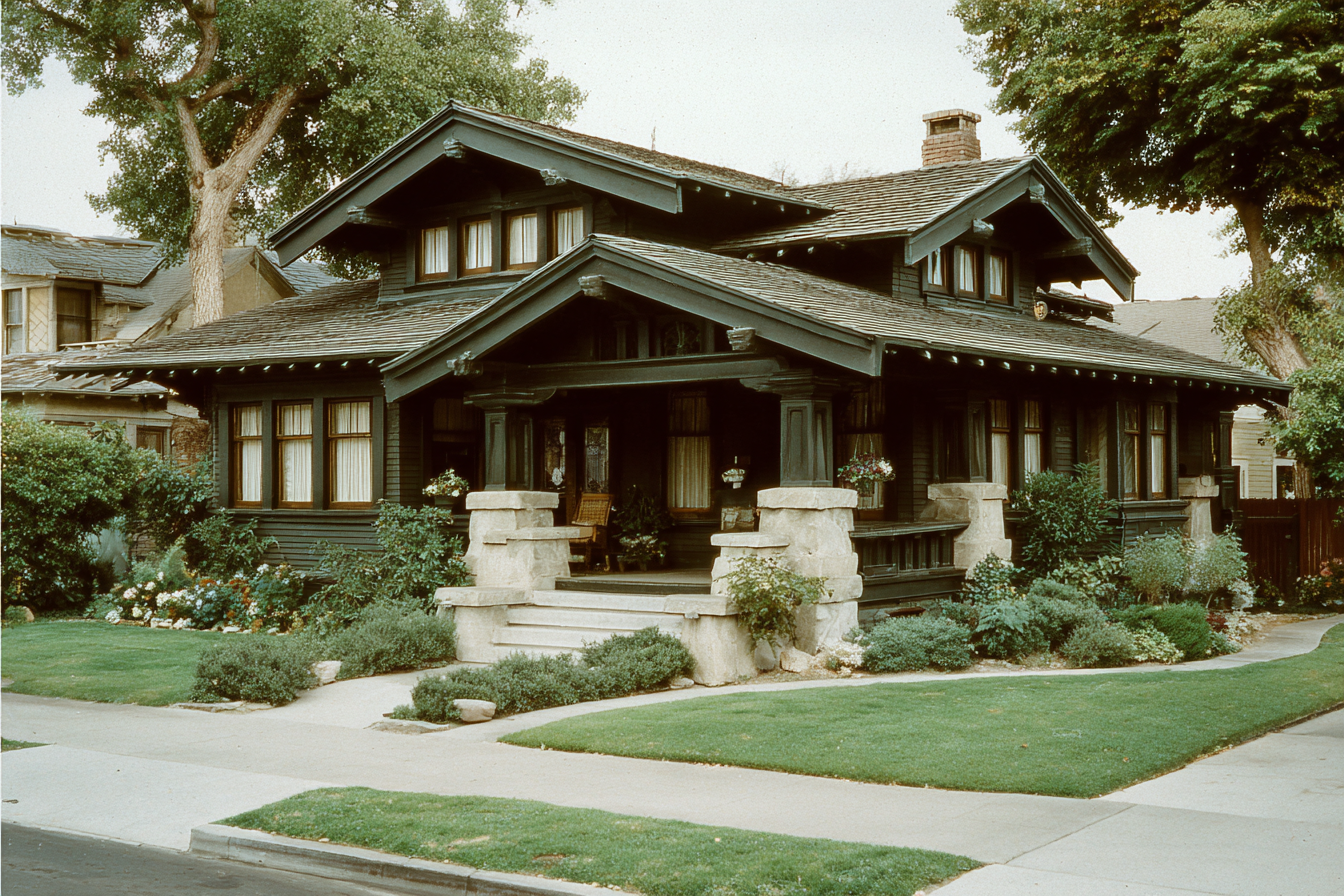
As the style evolved through the 1910s, intersecting gables became more common. A secondary gable might project forward to emphasize the living room or entry, adding dimensional massing.
Pitch variation increased in this period. While still generally moderate, slopes often became slightly steeper than early examples. The silhouette gained articulation without losing restraint.
The cross-gable adds architectural complexity while preserving the low, sheltering character that defines Craftsman design.
Airplane Bungalow
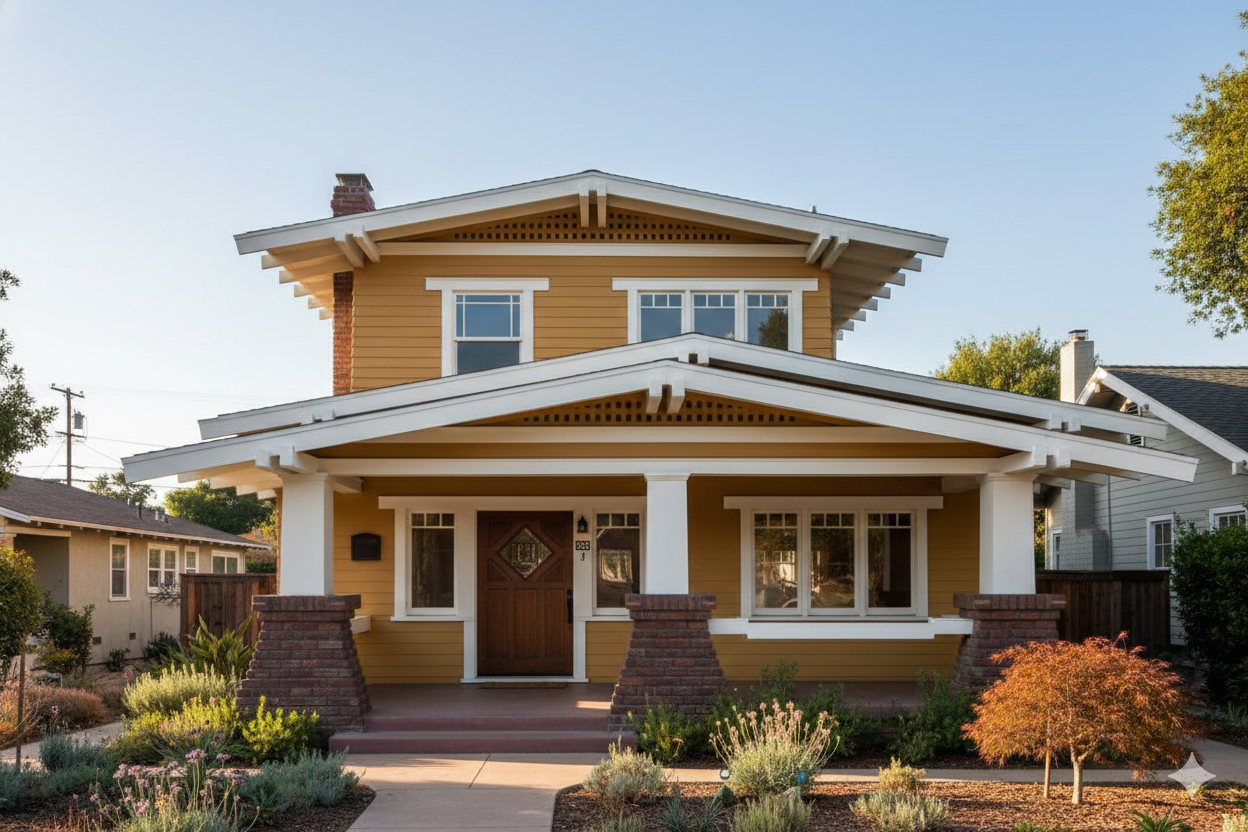
A distinctly California variation, the Airplane Bungalow features a small second-story volume centered on the primary roof. This “pop-up” element often has its own low gable and is surrounded by windows for ventilation and light.
The main roof remains low and horizontal, anchoring the structure, while the upper element introduces vertical punctuation.
The result is both practical and expressive. It preserves the grounded bungalow form while subtly lifting the composition.
Rooflines are the easiest entry point into understanding architecture. They are visible from the street, legible from a distance, and often the clearest clue to a home’s era and intent.
On your next walk, look up. Try naming the roof before you study the façade. Is it steep and vertical? Low and sheltering? Concealed behind a parapet? Does the pitch suggest Tudor drama, Craftsman restraint, or Spanish calm?
Once you start identifying rooflines, entire blocks begin to read differently. Architecture becomes less abstract and more conversational.
The answers are overhead.
Michael Robleto
PreWar & MidCentury Specialist
Compass
213-595-4720
michael.robleto@compass.com
About The Author
Michael Robleto is a Los Angeles–based REALTOR® specializing in historic, pre-war, and mid-century residential properties, with a focus on Pasadena, Altadena, and Eastside neighborhoods, including Los Feliz, Silver Lake, Eagle Rock, and Mount Washington.
Known for his deep understanding of older homes and residential construction, Michael helps clients navigate the complexities of historic properties—from aging mechanical systems to long-term ownership considerations. His approach combines data-driven guidance with thoughtful, modern marketing, allowing clients to make informed decisions in changing markets.
A California native and the son of a contractor, Michael grew up in an older bungalow and has spent more than two decades studying Southern California’s residential architecture. He currently serves as Chairman of the Board of Pasadena Heritage and writes about homeownership strategy, architecture, and market dynamics through his Bungalow Agent platform.



DTLA condo market hurts sellers but buyers gain